
Diplomat Correspondent
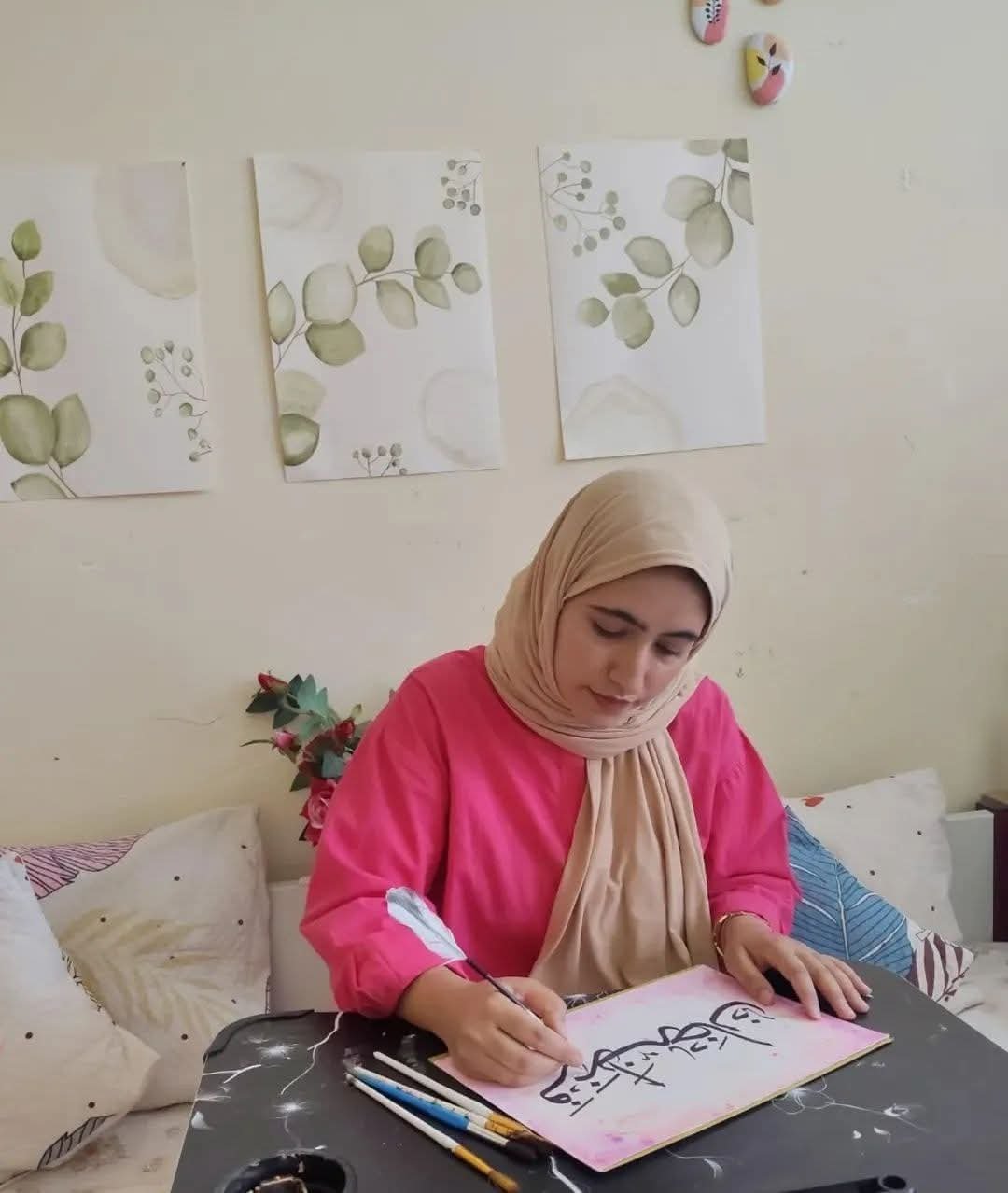
Pulwama,(DD): In the serene, green village of Arigam nestled in South Kashmir’s Pulwama district, the rhythmic sound of pen on paper is creating waves of inspiration. At the heart of this quiet artistic movement is Nida Muskan, a 22-year-old self-taught calligrapher whose intricate scripts and soulful verses are gaining admirers far beyond her village lanes.
Armed with ink, paper, and an unwavering love for the written word, Nida is breathing life back into the traditional art of calligraphy — one carefully crafted letter at a time.
“Calligraphy isn’t just art to me. It’s worship, it’s silence, and it’s voice. Every stroke I make carries emotion,” says Nida, her eyes reflecting the passion that drives her. “In a world rushing toward digital screens, I chose to slow down and return to something timeless.”
Her journey began during her school years when, while practicing handwriting, she found herself drawn to the beauty of Arabic and Urdu calligraphy. What started as curiosity soon evolved into devotion. With no formal training, she turned to online videos, ancient manuscripts, and endless practice to perfect her technique.
“I remember sitting by the window for hours, watching the mountains and just writing,” she recalls. “Sometimes ver2ses from the Quran, sometimes couplets from Ghalib or Iqbal. I felt like I was stitching words into something eternal.”
Today, her calligraphy features powerful spiritual verses, poetic expressions, and cultural motifs — a graceful blend of the traditional and the personal. She works mostly in the Nastaliq and Diwani styles, both known for their elegant curves and fluidity.
Her growing popularity on social media has brought her recognition from artists and educators alike. Yet, it’s the appreciation from her own community that means the most.
“She’s not only a talented artist but also a symbol of resilience and grace,” says Rifat Jan, a local teacher and one of Nida’s early supporters. “At a time when most youth are distracted, she has built something beautiful out of patience and ink.”
Parents in the village are encouraging their children, especially girls, to learn from Nida. “My daughter keeps saying, ‘Mama, I want to write like Nida Didi.’ That’s the kind of role model she has become,” says Humaira Bashir, a mother of two.
Despite her rising fame, Nida remains grounded and clear about her purpose. “It’s not about popularity. I want to preserve a sacred art and inspire others. If even one child picks up a pen because of me, that’s success.”
She dreams of opening a small calligraphy studio in Pulwama, where she can mentor aspiring artists and host exhibitions that bring attention to Kashmir’s rich artistic heritage.
“Art connects us — to God, to each other, and to ourselves. In this ink, I’ve found my identity, and I want others to find theirs too,” Nida says with a quiet smile.
As the sun sets over Arigam, the young calligrapher returns to her desk. The lines she draws may fade from the paper someday, but the inspiration she offers to Kashmir’s next generation is inked deeply in hearts — indelible, elegant, and enduring(DD)