
By Dr. Yudhbir Singh, Associate Professor, Department of Geology, University of Jammu
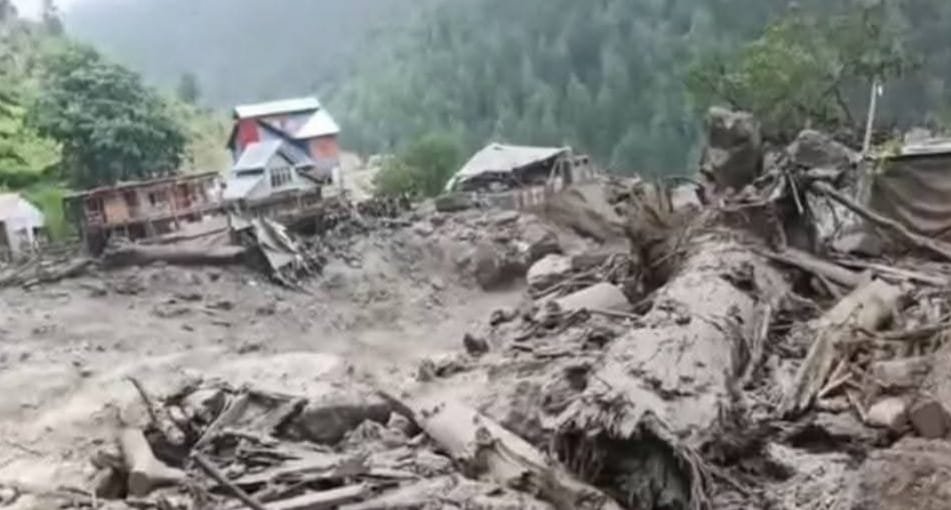
Jammu, (DD)The recent cloudburst in the Chasuti area of Padder, Kishtwar district, is a heartbreaking tragedy. It is yet another grim reminder of similar incidents in Uttarakhand, Himachal Pradesh, and across the Union Territory of Jammu and Kashmir in the last few months. Unfortunately, such extreme weather events are becoming increasingly frequent across the Himalayan region.
Cloudbursts occur when more than 100 mm of rain falls within an hour over a small area. This phenomenon is the result of a complex interplay of atmospheric factors. The primary driver of their growing frequency is global warming and climate change. As temperatures rise globally, the atmosphere can hold more moisture, creating conditions for intense rainfall events.
The Himalayan region is warming at a rate faster than the global average, making it even more vulnerable. Warmer air carries more moisture, which, when forced to rise over mountain slopes, forms towering cumulonimbus clouds capable of releasing torrential rain in a matter of minutes. Additionally, higher temperatures destabilise the atmosphere, triggering more frequent and violent events.
However, climate change is not the only culprit. Human activities—unchecked construction, deforestation, rapid urbanisation, and an ever-growing influx of tourists—are placing immense pressure on these fragile mountain ecosystems. The alteration of natural drainage systems, encroachment on riverbanks, and the disposal of garbage and plastic waste into the environment are worsening the situation.
When warm, moisture-laden air strikes a mountain range, it is forced to rise and cool, condensing into water droplets. Strong updrafts prevent gradual rainfall, causing all the accumulated moisture to fall suddenly—a cloudburst. The impact is catastrophic, especially in hilly regions where narrow valleys and steep slopes amplify the destructive force of flash floods.
We must change our approach urgently. Nature must be treated with the same respect and reverence as we afford our deities. Our development models must be guided by sustainability, not short-term gain. The government should adopt a proactive strategy—using these tragedies as case studies—to implement strict regulations on construction near rivers, streams, and landslide-prone areas. Natural water channels must be restored to their original course and size.
Equally important is the role of communities. Local populations must work in close coordination with government agencies, follow guidelines, and adopt sustainable practices. Tourism must be reimagined to prioritise ecological preservation over commercial exploitation.
The challenges are significant, but they are not insurmountable. With a united effort—combining scientific understanding, government policy, and community responsibility—we can protect these fragile ecosystems from further degradation. By acting now, we can hope to prevent future tragedies like the one in Kishtwar, and ensure that the Himalayas remain a source of life, not loss.(DD)

Dr Yudhbir Singh
Associate Professor
Department of Geology University of Jammu