
Diplomat Correspondent
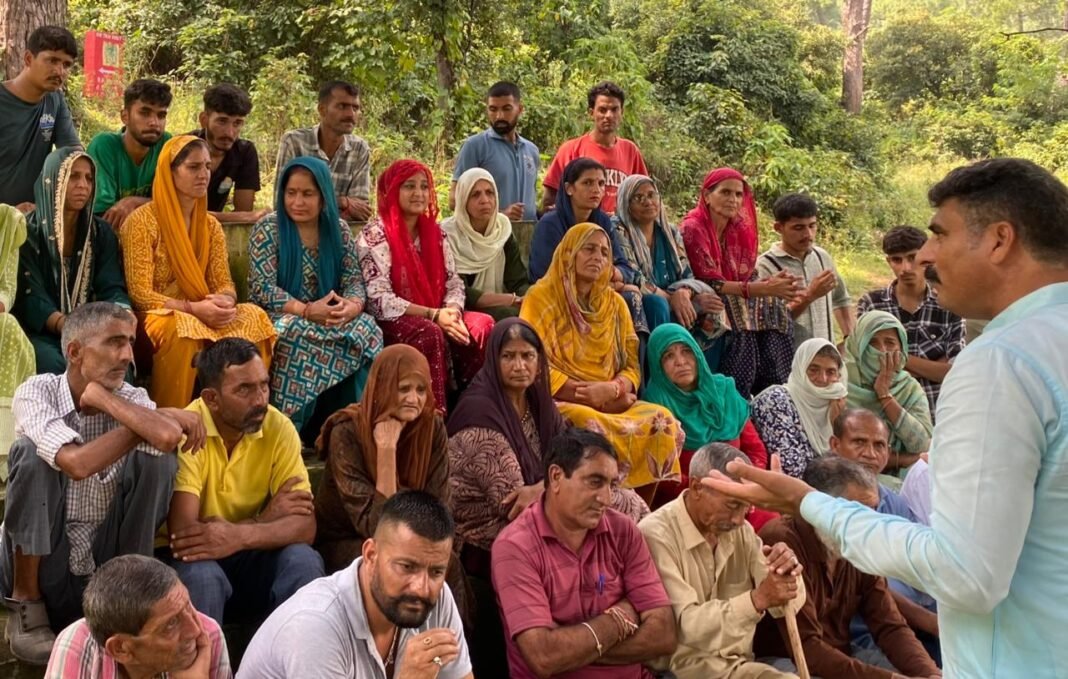
Jammu:DD, In its continued efforts to understand the prismatic perspective on the discourse of marginalization in J&K, a one-day consultative workshop on “Constitutional Reforms and Marginalized Groups: A Socio-Legal Analysis in Reorganized Jammu and Kashmir” was organized under the aegis of the Indian Council of Social Science Research (ICSSR)-sponsored Research Project in collaboration with the Department of Law, University of Jammu.
The event brought together eminent scholars, community leaders, activists, and policymakers to deliberate on challenges and opportunities faced by marginalized communities following the constitutional reorganization of J&K.
The workshop featured three technical sessions addressing displaced communities, tribal groups, gender perspectives, and policy analysis.
The opening session, chaired by Prof. Arvind Jasrotia, outlined the objectives of the study, including examining socio-economic impacts, human rights concerns, and proposing inclusive policy measures, followed by special remarks on the theme by Prof. Manju Jamwal, Head, Department of Law.
Speaking on behalf of PoJK displaced families, Dr. Deepak Kapoor, President, PoJK Visthapit Samiti, and Ms. Romi Sharma, Chairperson, Parivartan NGO, stressed the urgency of rehabilitation through land rights, housing, education, and political representation.
Representatives of West Pakistan Refugees, Shri Labha Ram Gandhi and Shri Jagdish Singh Manhas, acknowledged recognition post-2019 but urged deeper integration via education, employment, livelihood opportunities, and socio-economic empowerment.
On Kashmiri migrants, Shri B.L. Saraf, Retired District & Sessions Judge, emphasized judicial sensitivity and special legislation, while Dr. Mahesh Kaul highlighted cultural preservation and resettlement policies to address identity crises.
From a gender lens, Prof. Vishav Raksha, Head, Department of Sociology, and Dr. Hema Gandotra, Associate Professor, underlined multiple vulnerabilities faced by displaced women, especially from the Valmiki community, calling for gender-sensitive reforms, welfare schemes, and protective legal frameworks.
The tribal session focused on Gujjar-Bakarwal, Pahari Ethnic Group, and Paddari Tribe. Dr. Javaid Rahi noted benefits post-reorganization through the Forest Rights Act, SC & ST Atrocities Act, and political reservation, while cautioning about implementation gaps.
Shri Vikrant Sharma, State Coordinator, Pahari Tribe ST Forum, termed recognition of the Pahari community as a tribal group a historic milestone post-reorganization but flagged issues like discontinued scholarships, inadequate hostels, and the need for proportional political reservation with respect to the population.
In the expert panel, Shri K.B. Jandial, retired IAS officer, observed deeper emotional integration, reduced militancy, and rising investments creating over 255,000 jobs, while noting that certain marginalized groups still face gaps in political representation.
Prof. Renu Nanda, former Head and Dean of Education, emphasized the social responsibility of institutions in building inclusive reforms. Dr. Ganesh Malhotra shared insights on strategic and political dynamics in South Asia, linking them to local governance in Jammu and Kashmir.
Legal reforms were discussed by Advocate Kiran Thakur, who highlighted progressive changes under the Domestic Violence Act following the reorganization. She noted that live-in relationships and broader definitions of shared households are now legally recognized, with expanded support mechanisms through NGOs and one-stop centers.
Dr. Swati Sharma, social activist, echoed these points and stressed the importance of women’s rights and empowerment in the evolving legal landscape.
The session also featured an interactive discussion in which students and stakeholders engaged with the themes of the project through a series of questions and comments, adding diverse perspectives to the dialogue.
Concluding the proceedings, Prof. Jasrotia delivered the vote of thanks, acknowledging the contributions of participants, stakeholders, and research team, and reiterating the significance of collective engagement in addressing the issues under study.DD