
Diplomat Correspondent
Washington: In the annals of sports history, few names resonate with the power, charisma, and sheer impact of Muhammad Ali.
Ali Born Cassius Marcellus Clay Jr. in Louisville, Kentucky, in 1942, Ali transcended the sport of boxing to become a global icon, a civil rights activist, and a figure whose influence shaped generations.
His self-proclaimed title, “The Greatest,” was not merely an assertion of ego; it was a truth he proved repeatedly, both inside and outside the ring.
Was Considered A Force of Nature in Ring
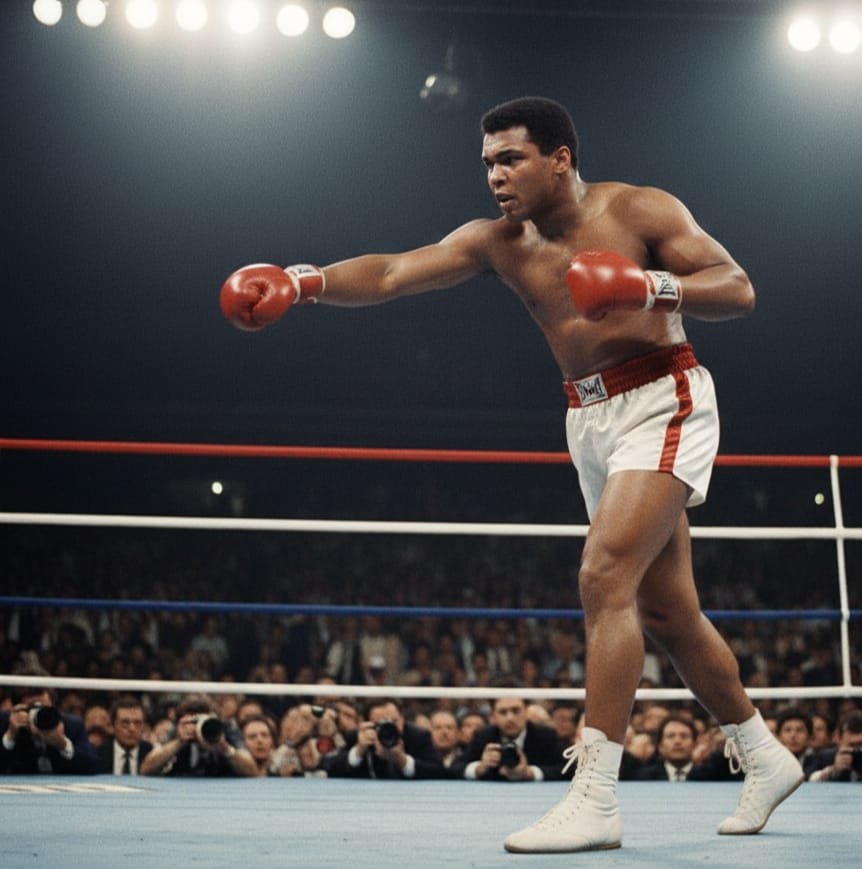
From the moment he burst onto the professional scene after winning Olympic gold in 1960, Ali was unlike any heavyweight before him. His style was revolutionary: a dazzling combination of speed, agility, and power, encapsulated in his famous mantra, “Float like a butterfly, sting like a bee.” He defied the conventional image of a heavyweight, moving with the grace of a much lighter fighter, dodging punches with balletic ease, and delivering lightning-fast combinations.
His early career was a meteoric rise, culminating in his shocking defeat of the fearsome Sonny Liston in 1964 to claim his first world heavyweight title.
This victory, against all odds, announced the arrival of a new era. What followed were legendary bouts against the likes of Joe Frazier, George Foreman, and Ken Norton, fights that pushed the boundaries of human endurance and skill.
The “Rumble in the Jungle” against Foreman and the “Thrilla in Manila” against Frazier remain etched in boxing lore as testaments to Ali’s indomitable will and championship’ spirit.
Known As Champion of Conscience
Ali’s greatness, however, extended far beyond his athletic prowess. In 1964, he announced his conversion to Islam and changed his name to Muhammad Ali, a profound statement of identity and belief. This was the first of many instances where Ali would use his platform to challenge societal norms and fight for justice.
His most defining moment of activism came in 1967 when he refused induction into the U.S. armed forces during the Vietnam War, citing his religious beliefs and opposition to the conflict.
“I ain’t got no quarrel with them Viet Cong,” he famously stated. This principled stand led to his arrest, conviction, and the stripping of his boxing license and heavyweight title.
He sacrificed three and a half years of his prime boxing career, but his unwavering stance made him a powerful symbol of resistance against injustice and a hero to the burgeoning civil rights movement.
The Embodiment of Charisma:
Beyond his physical and moral courage, Ali possessed an unparalleled charisma and wit. His poetic boasts, often delivered in rhythmic verse, were legendary. He was a master of psychological warfare, verbally dismantling opponents before he even stepped into the ring. His interviews were always captivating, filled with humor, defiance, and profound insights. He was a showman, an entertainer, and a master communicator who understood the power of his voice.
Left Behind A Lasting Legacy:
Muhammad Ali’s life was a testament to the idea that true greatness encompasses more than just talent. It requires courage, conviction, and a willingness to stand for something bigger than oneself. Even after his boxing career ended and he bravely battled Parkinson’s disease for decades, his spirit remained unbroken.
He taught us that a champion isn’t just someone who wins fights, but someone who fights for what is right. He was a man who dared to be different, who spoke truth to power, and who inspired millions to believe in themselves and their dreams. Muhammad Ali was, and forever will be, “The Greatest” – the GOAT – a legend whose legacy will continue to inspire generations to come.DD