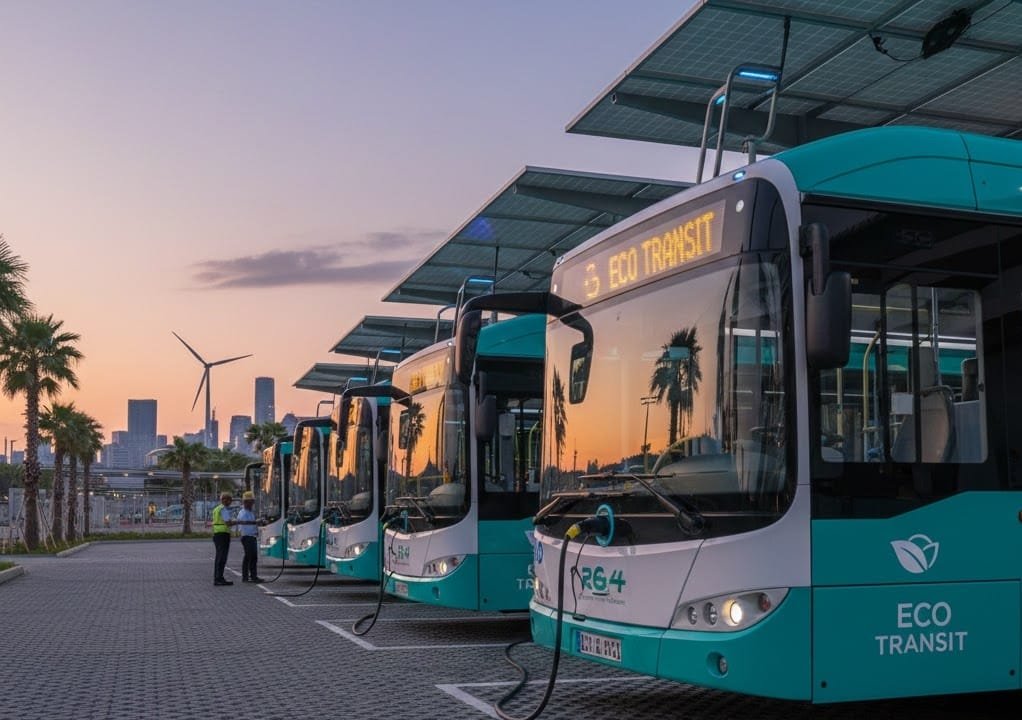
Jammu: Residents of the historic Bahu Fort area have urged Jammu and Kashmir Chief Minister Omar Abdullah and Transport Minister Satish Sharma to introduce Smart City electric bus services on the Bawe Wali Mata–Bahu Fort route, citing the need for improved last-mile connectivity, sustainable transport, and better access to one of Jammu’s most prominent religious and tourist destinations.
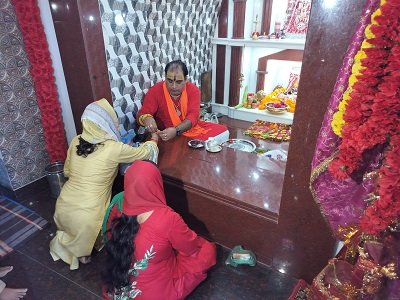
In a collective appeal, locals highlighted that the Bawe Wali Mata Temple—one of the most revered shrines in the region—witnesses a steady influx of devotees throughout the year, with particularly heavy footfall on Saturdays, Sundays, Tuesdays, during Navratri, and on other auspicious occasions as per the Hindu calendar.
The Bahu Fort belt is also a major tourism and cultural hub, home to prominent attractions such as Bagh-e-Bahu, North India’s largest fish aquarium, an open-air theatre, and the popular ropeway (cable car). These sites draw large numbers of domestic tourists and local visitors on a daily basis, significantly increasing transport demand in the area.
In addition to its religious and tourism importance, the Bahu Fort area is a densely populated residential zone, with nearly 20,000 residents spread across two municipal wards. A large section of the population depends on public transport for daily commuting, including students, office-goers, senior citizens, and small traders.
Despite this significance, Smart City electric buses do not currently ply on the Bawe Wali Mata–Bahu Fort route. Government-operated e-bus services terminate nearly three to four kilometres before the temple, around the Police Station, Bagh-e-Bahu, leaving a critical gap in connectivity.
As a result, pilgrims, tourists, elderly citizens, and local residents are compelled to rely on outdated and overcrowded mini-buses or walk long distances—a situation that becomes particularly difficult for senior citizens and people with mobility challenges.
“The absence of eco-friendly, air-conditioned electric buses on such a high-footfall route severely affects last-mile connectivity and undermines the objectives of sustainable urban development envisioned under the Smart City Mission,” said Yogesh Sagotra, a journalist and local resident of Bahu Fort.
He added that extending e-bus services up to the Bawe Wali Mata Temple would not only ease traffic congestion but also promote green mobility and significantly enhance the experience of pilgrims and tourists visiting Jammu.
Residents further pointed out that the introduction of electric buses on this route would align with the government’s vision of developing Jammu as a modern, environmentally responsible city. It would strengthen public transport infrastructure, reduce dependence on polluting private vehicles, and support tourism growth.
The Bahu Fort community has urged the Transport Department to accord priority to the proposed extension in the larger public interest and ensure its early implementation for the benefit of devotees, tourists, and local residents alike.DD

Chief Editor
Diplomat Digital