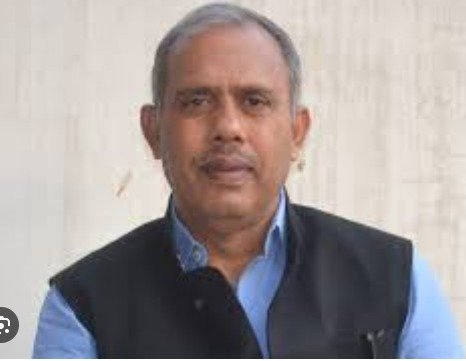

Prof. Shyam Narayan Lal
In contemporary higher education, a renewed emphasis on creativity, interdisciplinarity, and cultural rootedness—clearly outlined in the National Education Policy (NEP) 2020—is reshaping how institutions conceive their learning environments. Management education, once grounded primarily in metrics, models, and behavioural frameworks, is now being reimagined as a holistic journey—one that cultivates emotional intelligence, aesthetic sensitivity, and the capacity to think across disciplinary boundaries.
Within this national shift, IIM Jammu is fast emerging as a leading example, with its strong emphasis on the integrated development of both mind and body. Through continuous engagement with a wide range of activities rooted in India’s rich cultural traditions, the institute fosters artistic and intellectual exploration at multiple levels—enriching learning and elevating the overall campus experience.
Among its most inspiring initiatives is a series of painting workshops led by Ānandam – The Centre for Happiness – in collaboration with the Painting Club. These sessions are more than creative interludes; they are spaces of reflection, connection, and discovery. They show how art, woven into the rhythm of academic life, can turn learning into a deeply personal and joyful journey.
These workshops have never been peripheral or ornamental as it happens in the most cases. At IIM Jammu, they have grown into meaningful pedagogical experiences that invite students and faculty to engage with the cognitive, emotional, and reflective dimensions of creativity. The creative journey began when Director Prof. B. S. Sahay, after careful deliberation, invited Mr. Kamlesh Gandhi, an internationally renowned painter from Jammu, to conduct a two-day workshop at IIM Jammu.
This initial engagement was followed by another intensive workshop led by the eminent artist Mr. Bhushan Kesar, accompanied by his son Mr. Ankush Kesar. Both witnessed enthusiastic participation of students and faculty and played a vital role in igniting a collective creative awakening.
The two-day workshop led by Kamlesh Gandhi cultivated the discipline of slow, attentive seeing—encouraging participants to observe form, proportion, and detail with a sense of meditative immersion. Many students, who often drift away from creative pursuits under academic pressures, rediscovered the quiet joy of handwork, precision, and reflection. In contrast, the workshop conducted by Mr. Kesar introduced a spontaneous, expressive aesthetic into the studio. Participants explored colour, texture, and movement with freedom, frequently describing the experience as liberating and joyful—a reminder that creativity is as much an emotional release as it is a technical skill. Together, these foundational workshops-built confidence, stirred curiosity, and reaffirmed that creativity is not an exclusive talent but an innate cognitive capacity accessible to all.
Within this expanding creative ecosystem, the forthcoming one-week Basohli Painting Workshop, commencing on 8th December, marks a significant deepening of IIM Jammu’s commitment to heritage-rooted learning. Being organised in collaboration with the Indira Gandhi National Centre for the Arts (IGNCA), Regional Centre – Jammu & Kashmir, the workshop will bring to campus ten accomplished women artists from Basohli—renowned custodians of the GI-tagged Basohli miniature tradition.
For seven days, these artists will work within the campus, producing original Basohli paintings using traditional techniques—grinding natural pigments, preparing handmade wasli, layering colours for luminosity, and drawing fine lines with controlled grace.
Each gesture becomes a pedagogical moment, offering student’s insight into patience, precision, discipline, and the deep cultural logic behind Basohli aesthetics. The artists will not simply demonstrate technique; they will reveal the philosophy behind the miniature tradition—how it blends storytelling, symbolism, and emotional clarity with a refined sense of design.
The week-long presence of Basohli artists on IIM campus will transform the campus into a living atelier, a dynamic space where art is not merely taught but embodied, interpreted, and experienced as cultural memory and civilisational knowledge. It would also be an invaluable occasion for students from diverse geographical backgrounds to be exposed to the intricacies of the local culture, allowing them to appreciate the depth, refinement, and identity-shaping power of this remarkable artistic heritage.
Parallel to their practice, an expert facilitator trained in both technique and pedagogy will guide students through Basohli’s grammar: its motifs, iconography, narrative structures, and literary inspirations—from Rasamanjari and Gita Govinda to Pahari poetry. This interdisciplinary learning environment dissolves the distance between art, literature, philosophy, and history. It becomes a rare classroom where visual narratives meet managerial imagination, where historical memory encourages contemporary innovation, and where tradition becomes a catalyst for new forms of creative thinking.
Equally enriching is the intergenerational and cross-cultural dialogue that unfolds when management students encounter these women artists. Students witness first-hand the dedication, emotional depth, discipline, and cultural pride required to sustain a traditional art form. In turn, the artists encounter an academic community eager to understand, appreciate, and preserve their heritage. This mutual respect—between cultural practitioners and aspiring managers—creates a powerful model of civil society engagement rooted in empathy, shared learning, and cultural continuity.
The Basohli Painting Workshop therefore extends far beyond technical proficiency. It offers lessons in attentiveness, humility, precision, and the delicate balance between discipline and imagination—qualities that define not only artistic excellence but also responsible leadership. Simultaneously, it provides a platform for the women artists to gain recognition, share their knowledge, and contribute to the cultural revival of the region. The residency thus becomes a space of collective creativity and shared imagination, where students, artists, faculty, and community members engage in deeper conversations about identity, heritage, and the future of cultural knowledge systems.
Complementing this initiative is the international painting workshop currently in preparation. Designed to bring global artists, creative scholars, and practitioners to IIM Jammu, the workshop will expose students to diverse aesthetic vocabularies and global creative philosophies. It will broaden visual literacy, develop intercultural competence, and position IIM Jammu as an active participant in international artistic and academic exchanges. The initiative not only enriches the creative environment on campus but also situates Indian artistic traditions—especially those of Jammu—within wider global conversations.
As this creative momentum grows, IIM Jammu is steadily shaping an environment where artistic practice naturally complements managerial learning. Students and faculty now engage regularly with watercolours, acrylics, sketching, and regional motifs in sessions that spark observation, imagination, and collaboration. The pedagogical value is clear: artistic practice strengthens cognitive flexibility, intuition, resilience, and reflective thinking—qualities vital for decision-making in complex environments. Faculty increasingly draw on these experiences to enrich classroom teaching through visual methods and reflective exercises. In the process, disciplinary boundaries soften, and the campus begins to embody the interdisciplinary ethos envisioned by NEP 2020.
These workshops demonstrate that creativity is not an add-on to management education but a foundational competence. They show how the arts nurture reflective thinking, emotional intelligence, cultural sensitivity, and innovative problem-solving—qualities indispensable for today’s leaders. They also underscore the role academic institutions can play in cultural revival, community empowerment, and the preservation of regional heritage.
The journey of painting workshops at IIM Jammu reflects more than artistic exploration; it reflects a profound pedagogical shift. These initiatives embody the spirit of NEP 2020 by restoring creativity, cultural memory, and interdisciplinary learning to the heart of higher education. They reveal that when art enters the management classroom, it expands the horizons of thought, connects students to their civilisational roots, and cultivates leaders who can think with clarity, feel with empathy, and act with imagination. In nurturing this creative ecosystem, IIM Jammu is not only shaping better managers—it is shaping culturally rooted, but globally aware citizens also capable of leading with insight, integrity, and a deep sense of belonging to Indian culture and tradition.
The Writer of This Article is Prof. Shyam Narayan Lal, Chairperson, Anandam and Media and Publication Division, IIM Jammu.