
Diplomat Correspondent
Tia & Tingmosgang (Leh),DD:The second day of the 1st Sham Festival continued to immerse visitors and tourists in the rich spiritual and cultural tapestry of Ladakh, with vibrant programs unfolding across the villages of Tia and Tingmosgang.
The day’s events were graced by Ghulam Mehdi, Executive Councillor (Chief Guest); Tashi Tundup, Councillor of Tingmosgang; Chief Planning Officer Tashi Gyalson; and Padma Angmo, Assistant Director, Department of Tourism, Leh — highlighting strong institutional support for promoting rural and cultural tourism in the Sham region.
The morning began in Tia village with a peaceful gathering and prayer session at the magnificent 97-ft Jambeyang (Manjushree) statue — the tallest of its kind, followed by a guided meditation. Visitors then embarked on the Tongtum Heritage Walk, navigating through the narrow alleys of Tia’s oldest settlement.
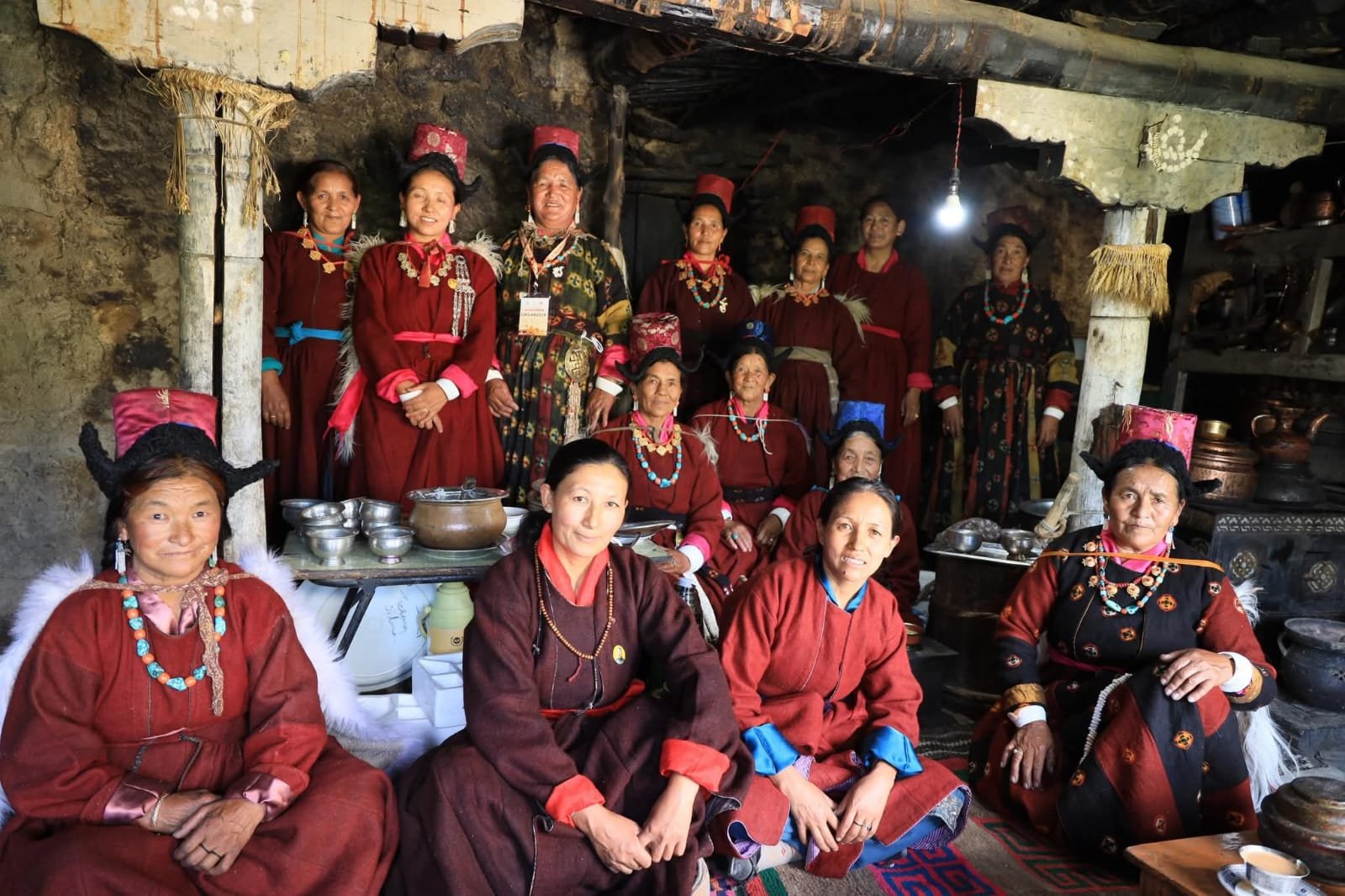
They visited ancestral Ladakhi homes such as Shingkan House, Kachepa House, Changri House, Sharapa House, and others, where they engaged in oral storytelling, witnessed traditional interiors, and tasted authentic cuisine prepared in ancestral kitchens.
A vibrant cultural gathering at Morzing, the heart of Tongtum, brought villagers and guests together.
The walk concluded at the archery ground, with displays of traditional Ladakhi sport.
In the afternoon, celebrations shifted to Tingmosgang, a village steeped in historical significance.
The program began with a briefing on the ancient well (Chudong) and the historic wall near the palace.
The visitors then proceeded to the Tingmosgang Palace, where they were introduced to the Tingmosgang Treaty and the broader historical and cultural legacy of the region through a guided narrative.
Later at Tseskarmo Monastery, the experience was further enriched by a Losar re-enactment by local residents.
The cultural segment featured captivating traditional performances including the Skin Dance, Karokpa Dance, and Horse Dance, offering a vivid glimpse into Ladakh’s living heritage while the nearby orchard area came alive with handicrafts, handlooms, and traditional food stalls, showcasing the community’s deep-rooted artisanal and culinary traditions.
Addressing the gathering, Executive Councillor, Ghulam Mehdi commended the efforts of the local administration and communities in reviving Ladakh’s cultural vibrancy through the Sham Festival.
He emphasized the importance of reconnecting younger generations with their roots and called for sustained support for rural heritage through inclusive and responsible tourism.
Tashi Tundup, Councillor of Tingmosgang highlighted the need to preserve and promote Sham as a heritage village, stressing its role in safeguarding Ladakh’s cultural roots.
Tsewang Dorjey, Nambardar of Tingmosgang, expressed heartfelt gratitude for selecting Temisgam as one of the key locations for the inaugural Sham Festival.
He appealed to travel agents and tour operators to actively promote the Sham region—particularly Tia and Temisgam, highlighting Tingmosgang’s rich history, ancient architecture, and cultural depth.
He also urged the administration to extend greater support in bringing the village’s unique heritage to a wider audience through enhanced tourism promotion.DD