

Diplomat Special Correspondent
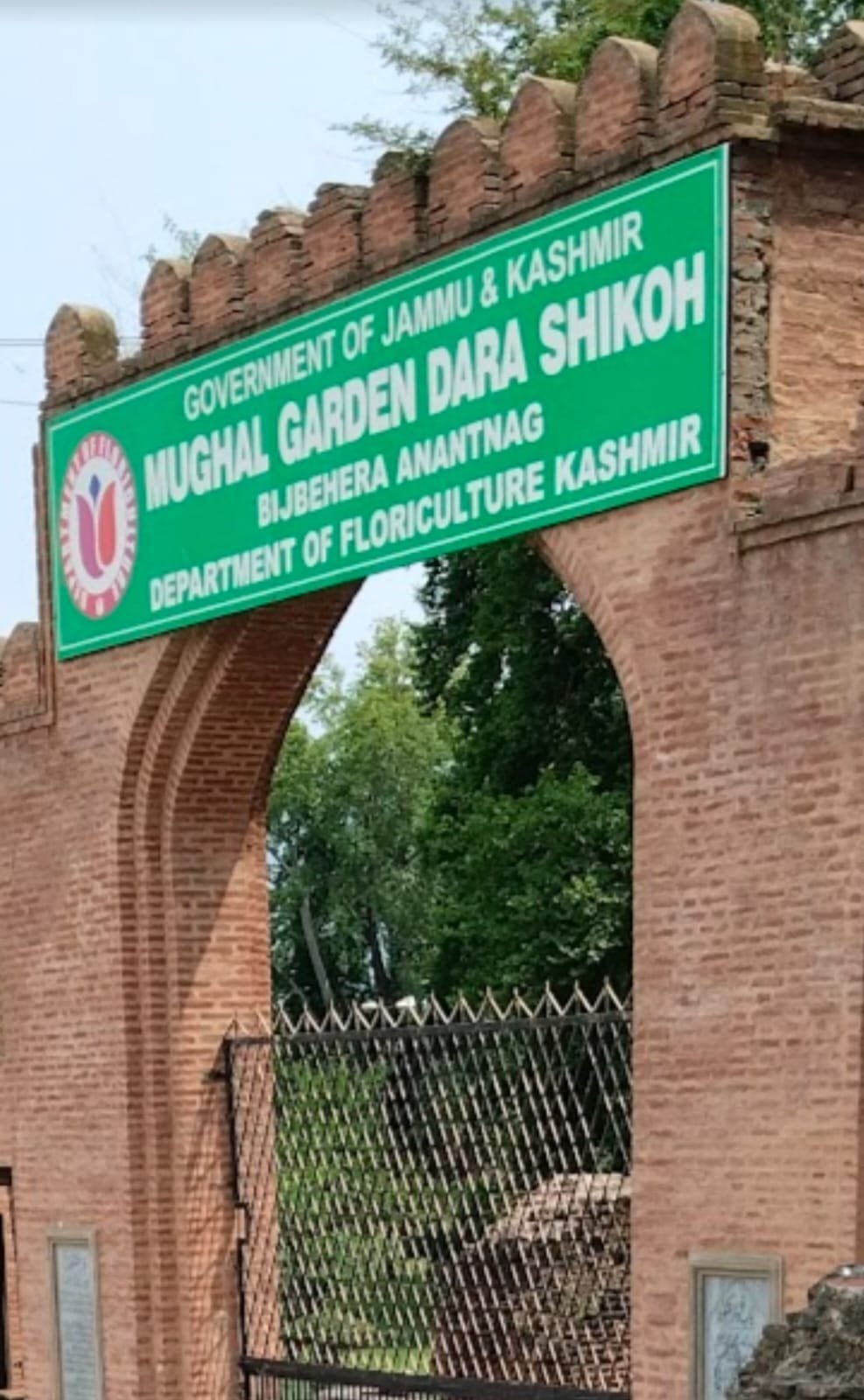
Bijbehara, (DD): Nestled along the banks of the Jhelum in Bijbehara, South Kashmir, lie the remnants of a Mughal-era vision—the Dara Shikoh Garden and Palace—a serene yet fading emblem of one of India’s most enigmatic historical figures. Dara Shikoh, the eldest son of Emperor Shah Jahan, is remembered less for battles won and more for his devotion to pluralism, philosophy, and the search for spiritual unity.
Built in the mid-17th century, the garden complex once exemplified Persian aesthetics and Mughal architectural grace. The charbagh layout, flowing water channels, and modestly adorned palace quarters reflected the soul of a prince who revered both the Quran and the Upanishads.
“This is not just a garden; it is a manuscript in stone—unread by most, but layered with meaning,” says Prof. Farooq Masoodi, a historian from the University of Kashmir. “Dara Shikoh’s presence here represents a very different face of Mughal rule, one rooted in dialogue and inclusiveness.”
Despite its rich heritage, the site has languished in obscurity, overshadowed by the more prominent Mughal gardens in Srinagar like Shalimar and Nishat. Yet, for many Kashmiris, the site still holds quiet reverence.
“We bring our children here to understand who Dara Shikoh was—not a conqueror, but a thinker,” says Ghulam Qadir Bhat, a retired schoolteacher from nearby Rainawari.
Another poignant layer adds to the site’s symbolism. Buried within the same complex in Bijbehara is Mufti Muhammad Sayeed, the former Chief Minister and founder of the People’s Democratic Party.
“It’s a symbolic coincidence,” notes Dr. Sameera, a political analyst based in Srinagar. “Dara stood for reconciliation—in vastly different centuries but in the same spirit. Their legacies now share soil, quite literally.”
Locals recall how Mufti Sayeed often spoke of Kashmir as a bridge between cultures. His decision—or rather his family’s decision—to have him buried at the Dara Shikoh Garden in Bijbehara wasn’t just a personal choice but a cultural statement.
As heritage activists raise alarms over the deteriorating structure, calls for preservation are intensifying.
“We urge the government to formally recognize this as a site of composite heritage,” says Zahoor Mir, a member of the Jammu and Kashmir Heritage Trust. “It is not just Mughal or political—it’s Kashmiri.”
Restoration efforts, if they come, could breathe life into this layered monument of philosophy, politics, and memory. Until then, the wind still moves gently through broken arches and wild grass, carrying whispers from a time when a prince dared to translate the Gita, and a leader dared to talk peace. (DD)