

The Government of India’s decision to rename all Raj Bhavans as Lok Bhavans and all Raj Niwas as Lok Niwas marks a profound shift in the symbolic and administrative character of Indian democracy. Enforced through a nationwide directive issued by the Ministry of Home Affairs (MHA) on 25 November 2025, and steered under the leadership of Union Home Minister Amit Shah, this reform represents far more than a change in nomenclature—it signifies the evolution of governance from a power-centric model to a citizen-centric ethos.
For decades, words like “Raj” carried with them the weight of colonial memory and monarchical authority. Though India has long been a vibrant democracy, remnants of pre-independence political vocabulary continued to create subtle psychological distances between the State and the citizen. The locations where constitutional authorities reside are symbols, and symbols shape perception. A “Raj Niwas” evokes imagery of hierarchy, power, and aloofness. In contrast, “Lok Niwas” immediately communicates belonging, accessibility, and democratic intimacy.
It is this conceptual shift—from rule to service, from authority to participation—that lies at the heart of the MHA’s decision. By renaming these constitutional residences, Home Minister Amit Shah has advanced a powerful message: governance in modern India must not only be democratic in practice but also in its cultural expression. Language shapes thought, and thought shapes behaviour. When the identity of institutions becomes people-centric, their functioning inevitably moves in the same direction.
The renaming also aligns with the broader governance philosophy championed by the current administration—one that emphasises transparency, proximity to citizens, and restructuring institutions to serve contemporary democratic aspirations. Just as the recent overhaul of India’s criminal justice laws sought to remove colonial residue and build a justice system rooted in Indian values, the “Lok Niwas–Lok Bhavan” reform furthers this process of civilisational and administrative renewal.
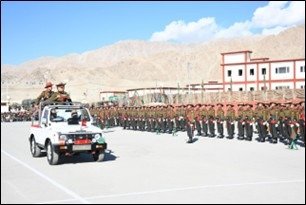
The implementation of this decision in Ladakh, where Lt. Governor Kavinder Gupta unveiled the new “Lok Niwas” nameplate in Leh, illustrates its deeper impact. In geographically challenging regions such as Ladakh, where difficult terrain and climate often limit citizen–administration interaction, the symbolism of “Lok Niwas” carries even greater significance. It tells the people that authority is not distant, that governance belongs to them, and that their voices matter in the making of policy and the functioning of the state.
What appears at first glance as a symbolic step is, in truth, a shift in governmental psychology. It has the potential to bridge psychological barriers between the public and constitutional offices. When governance is linguistically and structurally repositioned as people-oriented, it nurtures trust. And trust, in turn, strengthens accountability and improves administrative performance.
This reform will likely serve as a guiding light for other states and institutions across the country. It is a reminder that democracy is not defined only by elections or institutions, but also by the cultural signals that shape public consciousness. The renaming from “Raj” to “Lok” embodies the idea that power flows upward from the people, not downward from authority.
In essence, the MHA’s decision—rooted in the vision of Home Minister Amit Shah—reasserts the foundational spirit of the Indian Republic: sovereignty resides with the people. And in this renewed spirit, “Lok Niwas” stands not just as a name but as a promise—of accessibility, dignity, inclusiveness, and truly participatory governance.DD