
Journalists explore the Grade-I heritage building of Brihanmumbai Municipal Corporation; BMC officials brief delegation on civic administration, disaster management, and key development projects
By Jaan Mohammad
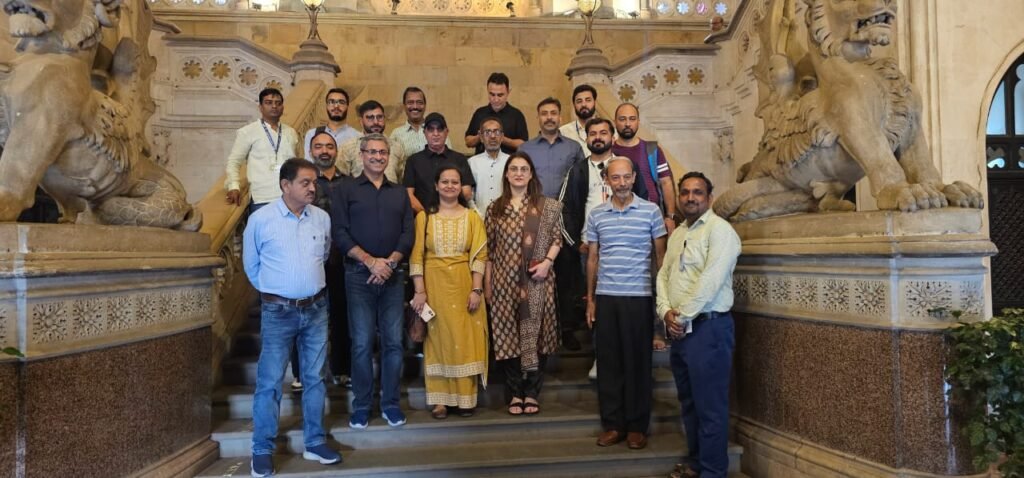
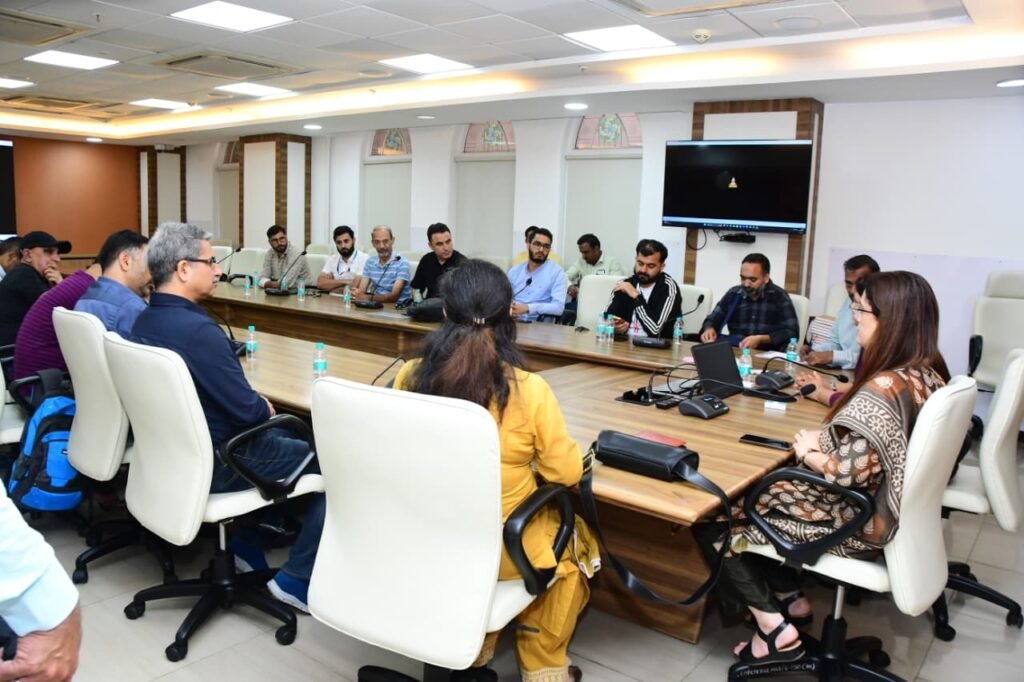
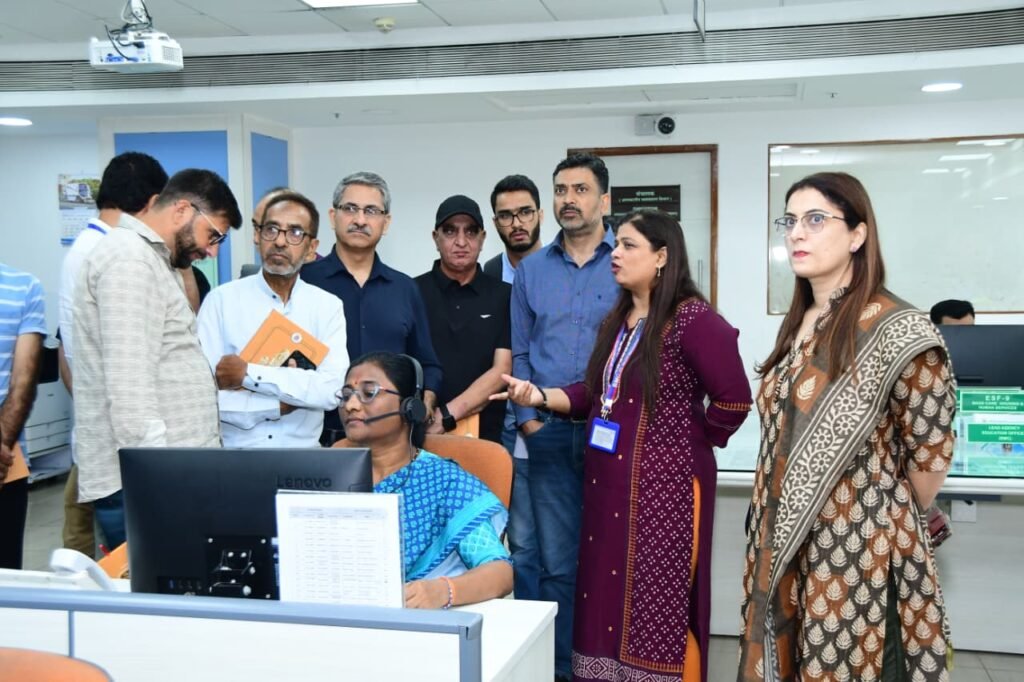
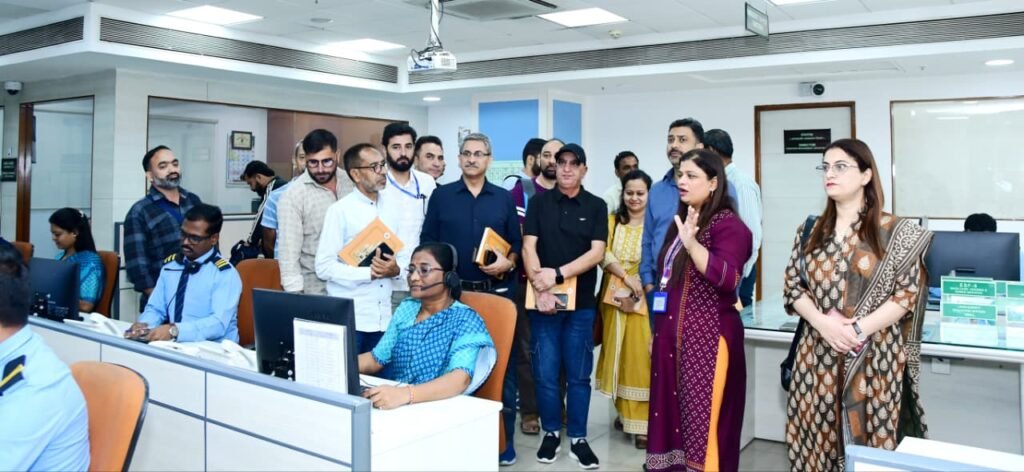
Mumbai, DD, On the second day of the PIB J&K Media Tour, the delegation began its engagements in Mumbai with a visit to the Brihanmumbai Municipal Corporation (BMC) Headquarters — India’s largest urban civic body. The visiting journalists explored the historic Grade-I heritage building guided by conservation architects and interacted with senior BMC officials to understand the functioning, challenges, and modernisation efforts of Mumbai’s municipal administration.
The media delegation was briefed by Rashmi Lokhande, Chief Officer, Disaster Management Department, Ganesh H. Puranik, Deputy Public Relations Officer, and Vijay Zore, Engineer, Coastal Road Project, BMC. They presented an overview of BMC’s civic services, infrastructure management, achievements, and future initiatives in urban governance and disaster response.
Lokhande shared that the BMC employs about 90,000 permanent and 100,000 contractual staff, making it one of the largest civic bodies in the world with nearly 200,000 employees in total. The BMC’s annual budget stands at ₹75,000 crore, placing it as the 18th largest municipal corporation globally and contributing approximately 6% to India’s GDP.
She explained that the BMC’s Disaster Management Department was established following the 1999 Latur earthquake, and after the 26 July 2008 Mumbai attacks, the control room was expanded and technologically upgraded. Today, every administrative ward in Mumbai has a functional control room to ensure rapid response to natural or man-made emergencies such as floods, cyclones, and earthquakes.
“Mumbai is India’s financial capital — life must go on here, regardless of the challenges,” Lokhande emphasized. “Every department within BMC operates in a state of readiness to ensure uninterrupted civic functioning.”
BMC operates under strict Standard Operating Procedures (SOPs) for all civic and emergency services. It provides citizens with dedicated helplines, fire and emergency services, and hotline-based communication networks to ensure seamless coordination among agencies. The department has also identified 108 support agencies that work in close coordination during any disaster situation.
Since Mumbai falls in Seismic Zone 3 and is vulnerable to cyclones and heavy flooding, the BMC has adopted a GIS-based multi-hazard management approach. The City Institute of Disaster Management offers free training programmes to citizens to enhance community preparedness and resilience. Lokhande also stressed that Disaster Management should be introduced as a compulsory subject in schools and colleges to build awareness and preparedness from an early age.
She further elaborated on BMC’s Disaster Risk Management Master Plan (DRMMP) — a comprehensive framework designed to reduce the city’s vulnerability to disasters through preparedness, planning, and coordinated response. The DRMMP includes Emergency Support Functions (ESF) to improve inter-agency collaboration.
BMC has also introduced the “iFlowsMumbai” Flood Warning System, developed in collaboration with the Ministry of Earth Sciences (MoES). This state-of-the-art system uses real-time rainfall, tide, drainage, and weather data to predict flood risks up to three days in advance, helping ground staff and officials take preventive action.
Additionally, BMC’s Community Resiliency Indicator (CRI) model measures the city’s resilience at the community level by assessing preparedness, response capacity, and recovery potential. Similarly, for the Coastal Road Project, BMC has implemented a Risk Assessment & Disaster Management Plan covering tunnel safety, storm surge impact, and infrastructure risks — ensuring the project’s long-term sustainability.
This media tour is organized by the Press Information Bureau (PIB), Jammu & Kashmir, under the leadership of Neha Jalali, Director, PIB Jammu. The delegation includes 14 journalists from Jammu and Srinagar, while Jaidevi Pujari Swami, Deputy Director, PIB Mumbai, was also present during the visit.
The five-day PIB J&K Media Tour aims to familiarize journalists from Jammu and Kashmir with India’s key developmental projects, Central Public Sector Enterprises (CPSEs), and strategic institutions, thereby strengthening regional media understanding of national growth initiatives and promoting greater collaboration between local and national institutions.DD