
Diplomat Correspondent
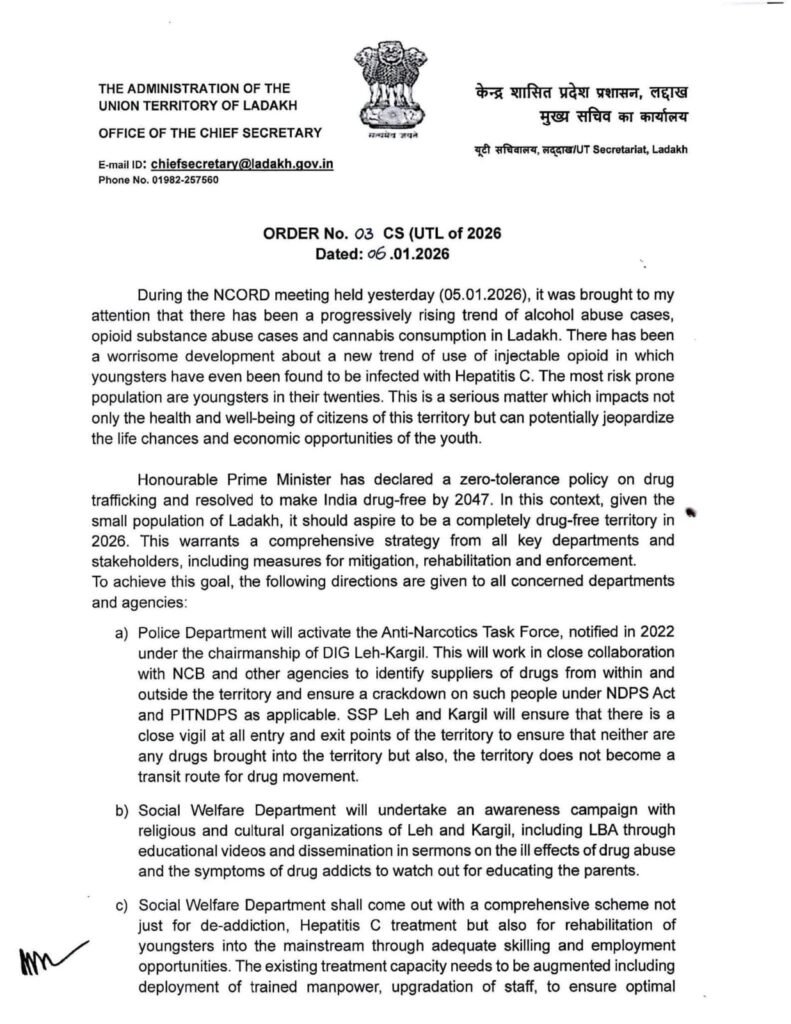
Leh, During an NCORD meeting held on January 5, 2026, the Administration of the Union Territory of Ladakh noted a progressively rising trend of alcohol abuse cases, opioid substance abuse cases, and cannabis consumption in the region. It was also reported that a new and worrying trend of injectable opioid use has emerged, with some youngsters found to be infected with Hepatitis C. The most risk-prone population was identified as youngsters in their twenties. The issue was described as a serious matter impacting the health and well-being of citizens and potentially jeopardizing the life chances and economic opportunities of youth.
The order stated that the Honorable Prime Minister has declared a zero-tolerance policy on drug trafficking and resolved to make India drug-free by 2047. In this context, given Ladakh’s small population, the territory should aspire to become completely drug-free in 2026. To achieve this, a comprehensive strategy involving mitigation, rehabilitation, and enforcement was directed to be adopted by all concerned departments and stakeholders.
The Police Department was directed to activate the Anti-Narcotics Task Force, notified in 2022 under the chairmanship of the DIG Leh-Kargil. The task force will work in close collaboration with the NCB and other agencies to identify drug suppliers from within and outside the territory and ensure a crackdown under NDPS Act and PITNDPS, as applicable. The SSPs of Leh and Kargil were directed to maintain close vigilance at all entry and exit points to prevent drugs from entering the territory and to ensure Ladakh does not become a transit route for drug movement.
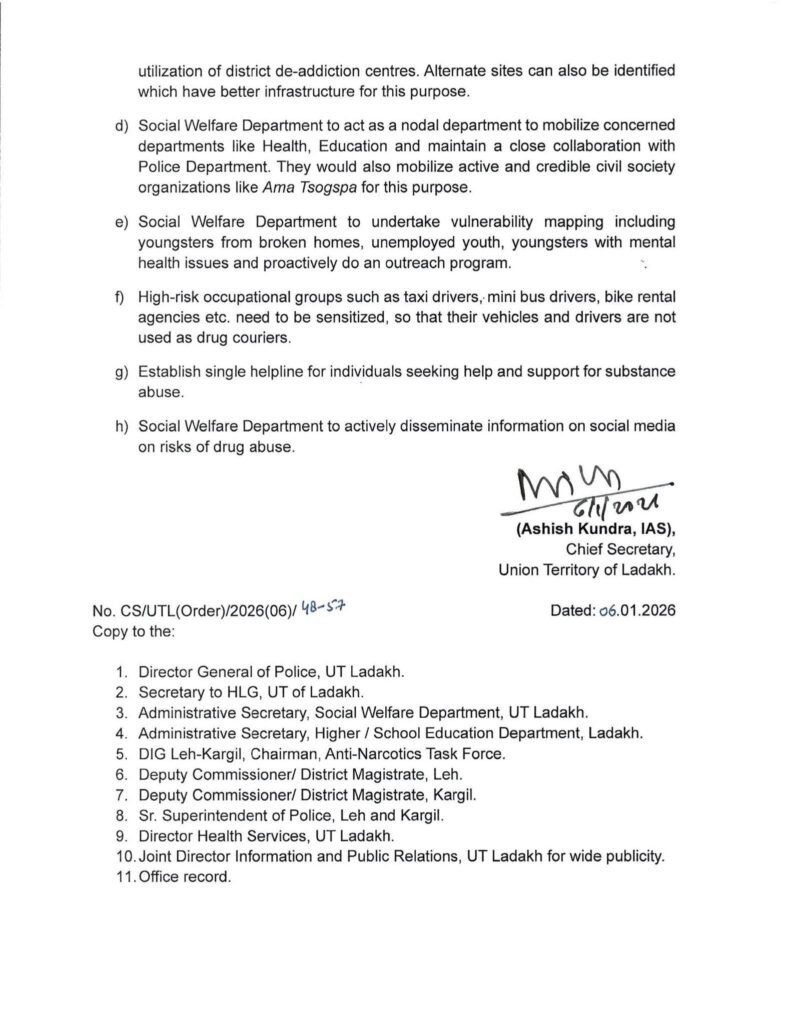
The Social Welfare Department was instructed to undertake an awareness campaign in collaboration with religious and cultural organizations of Leh and Kargil, including the LBA, using educational videos and dissemination through sermons on the ill effects of drug abuse and the symptoms of drug addiction to educate parents. The department was also directed to formulate a comprehensive scheme covering de-addiction, Hepatitis C treatment, and rehabilitation of youngsters through adequate skilling and employment opportunities. Existing treatment capacity is to be augmented through deployment of trained manpower and upgradation of staff to ensure optimal utilization of district de-addiction centres, with alternate sites identified where better infrastructure is available.
The Social Welfare Department was further designated as the nodal department to mobilize Health, Education, and other concerned departments and to maintain close collaboration with the Police Department. It was directed to involve active and credible civil society organizations, including Ama Tsogspa. The department was also tasked with undertaking vulnerability mapping, including identification of youngsters from broken homes, unemployed youth, and those with mental health issues, and to proactively conduct outreach programs.
High-risk occupational groups such as taxi drivers, mini-bus drivers, and bike rental agencies were directed to be sensitized to ensure their vehicles and drivers are not used as drug couriers. The order also directed the establishment of a single helpline for individuals seeking help and support for substance abuse and instructed the Social Welfare Department to actively disseminate information on the risks of drug abuse through social media.
The order was issued under Order No. 03 CS (UTL) of 2026, dated January 6, 2026, and signed by Ashish Kundra, IAS, Chief Secretary, Union Territory of Ladakh. Copies were forwarded to senior police, administrative, health, education, and information officials in Leh and Kargil for implementation and wide publicity.DD