
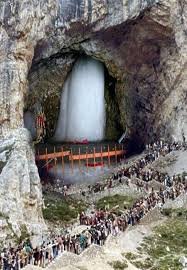
Over 70,000 security personnel deployed; multi-layered arrangements to ensure smooth pilgrimage
Diplomat Correspondent
Srinagar, (DD)With the annual Amarnath Yatra set to commence on 3 July, security agencies have put in place a comprehensive and multi-tiered security plan to ensure the safety of the pilgrims undertaking the holy journey to the Amarnath Cave Shrine in south Kashmir’s Himalayas.
Over 70,000 security personnel, including troops from the Army, CRPF, BSF, ITBP, SSB, and Jammu and Kashmir Police, have been deployed along the twin routes—Pahalgam in Anantnag and Baltal in Ganderbal. The security cover includes area domination patrols, drone surveillance, anti-sabotage checks, and sniffer dog squads along the entire stretch of the pilgrimage.
Security forces have established a three-tier security cordon. The outer perimeter ensures route sanitisation, the second layer comprises mobile Quick Reaction Teams (QRTs), and the inner ring includes checkpoints with RFID tracking systems to monitor pilgrim movement in real time.
Over 400 CCTV cameras and aerial surveillance drones have been deployed for real-time monitoring. Mobile bunkers and bulletproof vehicles have been stationed at sensitive points, especially in areas with a history of militancy or potential for ambushes.
To thwart any terror threat, road-opening parties (ROPs) of paramilitary forces and the Army are already active across national highways and key pilgrimage routes. All vehicles are being subjected to meticulous checking at designated frisking points.
The Intelligence Bureau, along with local intelligence units, has been tasked with monitoring suspect movements and intercepts. High-frequency wireless communication systems have been set up to ensure uninterrupted coordination between ground forces.
The security grid also involves coordination with the Indian Air Force, which remains on standby for aerial evacuation in case of emergencies.
All base camps—including Nunwan (Pahalgam) and Domail (Baltal)—have been turned into secure zones with metal detectors, body scanners, and restricted access. Special mountain patrol units are stationed on higher reaches of the yatra track to guard against infiltration and sudden attacks.
Pilgrims have been issued RFID-enabled yatra permits, and are advised not to stray from marked routes or camping areas. Each pilgrim’s movement is being tracked to ensure both security and timely assistance during medical or logistical emergencies.
The 2025 Yatra comes at a time when Jammu and Kashmir has witnessed increased terror activity in certain areas, including recent encounters in Reasi, Doda, and Kathua. While the overall security situation remains under control, authorities are not taking any chances.
The Lieutenant Governor, Manoj Sinha, who chairs the Shri Amarnathji Shrine Board (SASB), has personally reviewed the preparedness, while Union Home Minister Amit Shah has also held security review meetings in New Delhi with top intelligence and paramilitary officials.
The administration has appealed to locals and yatris alike to remain vigilant and report any suspicious activity. Pilgrims are urged to follow official advisories, carry valid ID and registration documents, and cooperate with security personnel during checks.
With all arrangements in place, the administration hopes to facilitate a peaceful, smooth, and spiritually fulfilling yatra for the lakhs of devotees expected to arrive from across the country(DD)