
Diplomat Correspondent
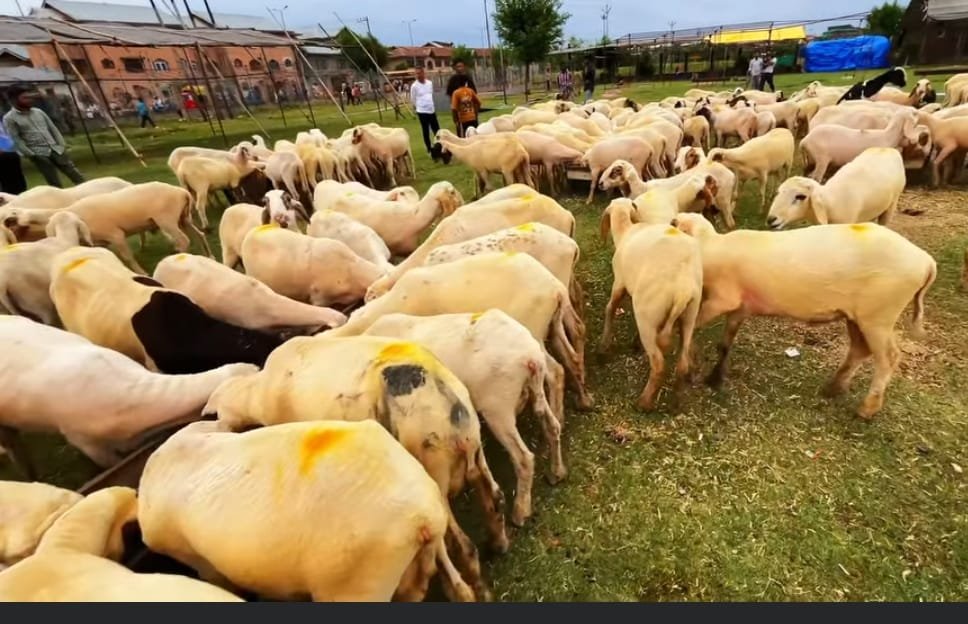
Srinagar, (DD): The spirit of Eid al-Adha appears dampened in Kashmir this year as the Qurbani (sacrificial animal) markets witness a sharp slowdown. Traditionally bustling with crowds and negotiations, livestock markets in Srinagar, Anantnag, Baramulla, and other towns now show signs of distress — with few buyers, unsold animals, and anxious traders.
Sellers and herders blame the downturn on soaring animal prices, widespread economic hardship, and a shift toward online or collective Qurbani services.
Haji Abdul Qayoom, a sheep seller from Budgam stationed at Srinagar’s Eidgah, said, “The market is completely down this year. Last year by this time, half our flock would be sold. Now people just look and leave.”
A medium-sized sheep that cost Rs 12,000 last year is now priced over Rs 18,000 — a jump too steep for many middle-class families.
Rehmatullah, a Gujjar nomad resting near his herd under a tarpaulin, said, “We walked all the way from Kangan with over 100 sheep. But we’ve sold barely ten in the past five days. People are bargaining hard or not buying at all.”
Across major animal mandis, the buyer footfall is visibly thin. Traders say rising costs — for feed, transportation, and market space — are eating into their earnings.
Shabir Ahmad, a young livestock dealer from Anantnag, said, “We’re paying more to bring the animals here, and people say our prices are high. How can we survive like this? It feels like Eid won’t come this year.”
On the other hand, families cite inflation and financial strain as reasons for delaying or skipping the traditional ritual.
Sameena Jan, a mother of three from Barzulla, said, “We are managing household expenses with difficulty. Qurbani is important, but prices are too high. We may join a community Qurbani or donate to a relief organization instead.”
The rise of online and collective Qurbani options — often cheaper and more convenient — is drawing customers away from physical livestock markets.
Naseer Gujjar, a seasonal seller who travels from Poonch each year, said, “This is the only time we earn. If the market doesn’t recover in the next few days, we’re finished.”
Despite the slump, some sellers remain cautiously hopeful. In Kashmir, last-minute buying often spikes just days before Eid.
Imtiyaz Dar, a livestock trader from Shopian, said, “Kashmiris buy at the last moment. We are hoping things pick up after 10th Zilhajj nears.”
For now, though, Kashmir’s Qurbani markets remain subdued — a reflection of rising costs, shifting trends, and the growing strain on traditional livelihoods(DD).