
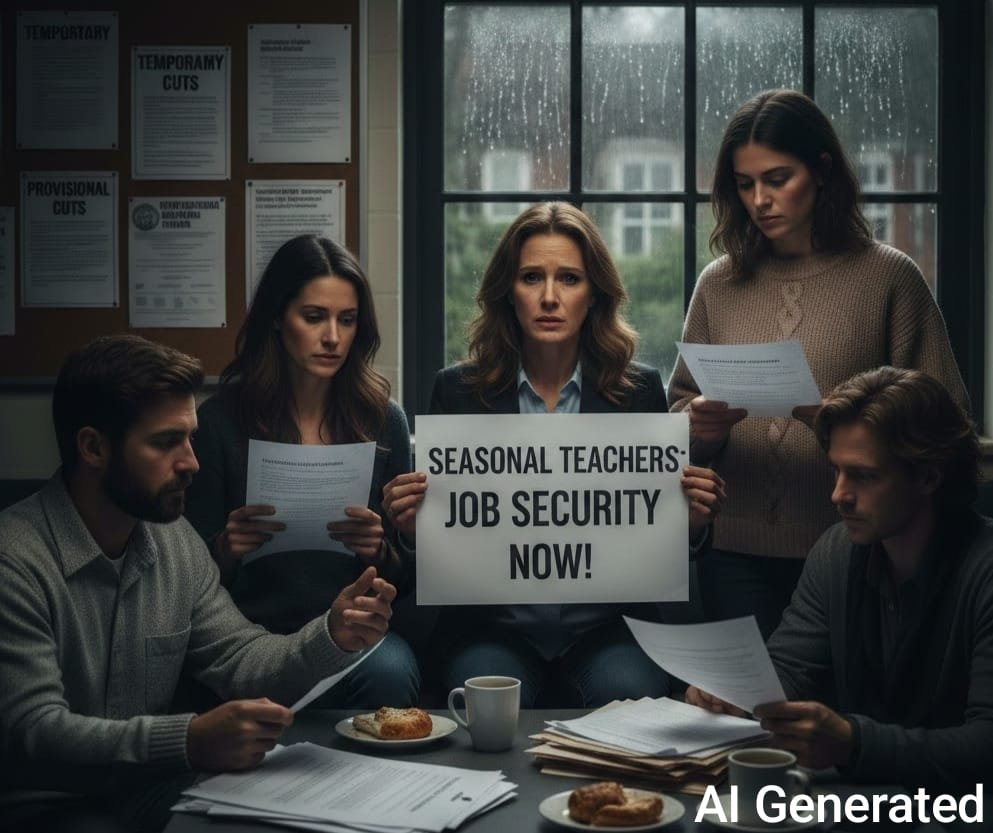
During the summer, the tribal population migrates to higher pastures with their livestock, and a dedicated group of teachers follows them, braving harsh conditions to educate tribal children. These seasonal teachers are the unsung heroes of education, working tirelessly to bridge the knowledge gap for tribal students. Unfortunately, the Jammu and Kashmir Government’s Budget for 2026–2027 makes no mention of any regularisation policy for seasonal teachers.
The struggle of these highly educated seasonal teachers is real, and it is not just about harsh weather conditions or rugged terrain. It is about job security, infrastructure, inadequate facilities, and the constant uncertainty that comes with being a seasonal teacher. Despite these challenges, these educators persevere, driven by their passion for teaching and their commitment to their students.
Seasonal teachers face numerous challenges. They work without electricity, proper infrastructure, or even basic amenities. Their classrooms are often makeshift tents, vulnerable to extreme weather conditions. Imagine teaching a class of 30 students in a tent, with the wind howling outside and the sun beating down. That is the reality for many seasonal teachers in Jammu and Kashmir.
Despite these obstacles, they use innovative methods to engage students and make learning enjoyable. They use storytelling and games to keep their students engaged, often going the extra mile to ensure that their students understand the material.
Seasonal teachers are paid meagre wages, which are often delayed, and they lack job security. They work for six months with no guarantee of continued employment. Many have been working for years, with no prospects for regularisation or career growth. Their struggles are often overlooked, and they remain unrecognised for their contributions.
The financial hardships faced by seasonal teachers are severe. Many have families to support, and delayed payments make it difficult for them to make ends meet. Despite this, they continue to work, driven by their dedication to teaching and their commitment to their students.
However, more needs to be done to address the concerns of seasonal teachers so that tribal students can continuously receive their basic education. The government needs to take a more proactive approach, engaging with local communities and involving them in the decision-making process.
To improve the functioning of seasonal centres, the government should frame a permanent job policy for seasonal teachers. It must recognise their services, experience, and expertise, which can significantly contribute to better policymaking. The government should provide teachers with training and capacity-building opportunities. It should ensure timely and adequate funding for seasonal schools. It should engage with local communities and involve them in the decision-making process. It should also integrate technology into classrooms, providing students with access to digital resources and tools.
The seasonal teachers of Jammu and Kashmir are a shining example of dedication and commitment to education. It is time for the government to recognize their contribution and provide them with a stable and secure future.
The story of seasonal schools in Jammu and Kashmir is one of resilience and determination. It is a story of teachers who trek several kilometres across difficult terrain and rivers in the upper reaches of Pir Panjal and other hilly areas to educate their students despite the odds. It is a story that needs to be told and heard.
As the government and policymakers look for solutions to improve tribal education, they must consider the suffering of seasonal teachers and tribal students in Jammu and Kashmir. These schools are a model of how education can be delivered in remote and challenging areas, and they deserve support and recognition.
The seasonal schools of Jammu and Kashmir are a beacon of hope for tribal students. They represent a chance for a better life and a brighter future. It is time for the government to recognise the importance of these schools and provide them with the support they need.DD