
Diplomat Correspondent
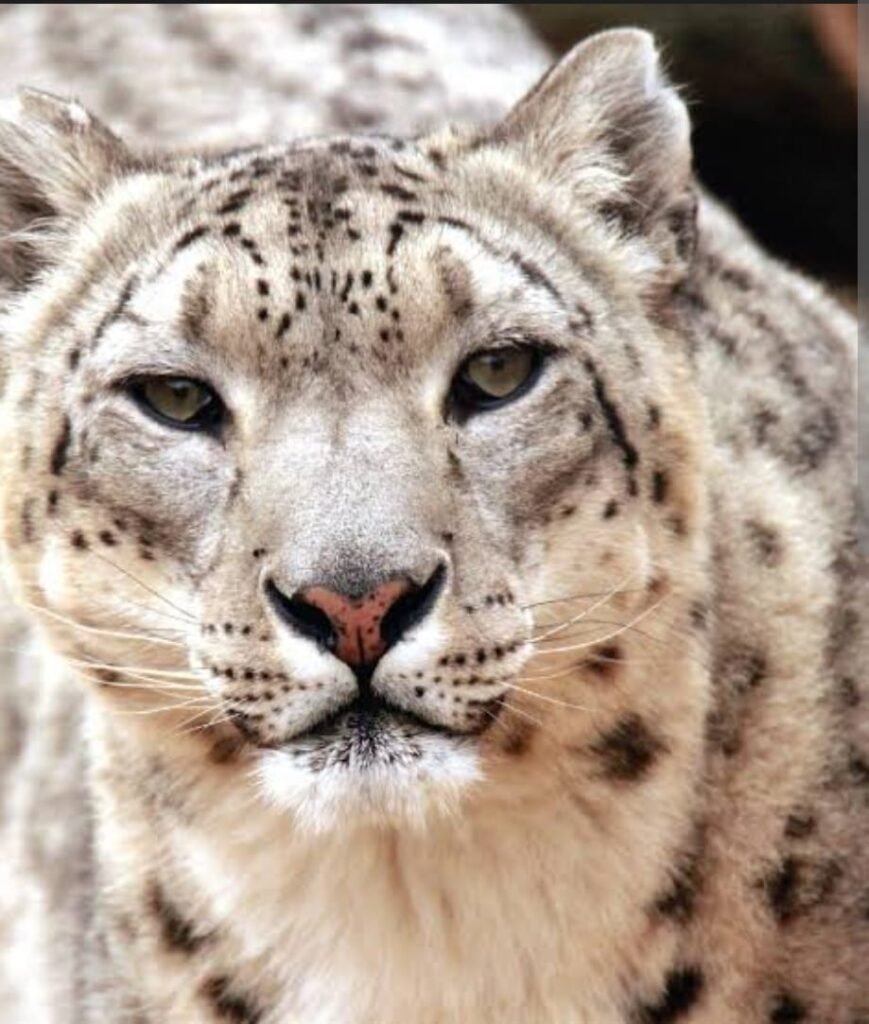
Srinagar, (DD): In a groundbreaking discovery, researchers have confirmed that snow leopards — often called the “ghosts of the Himalayas” — are not just seasonal visitors but permanent residents in the high-altitude landscapes of Jammu and Kashmir.
A landmark survey, carried out between 2022 and 2025 by the Nature Conservation Foundation (NCF) in collaboration with the J&K Wildlife Protection Department, has for the first time documented the year-round presence and breeding activity of these elusive cats in the Union Territory.
The study, conducted under the Snow Leopard Population Assessment in India (SPAI) protocol and supported by Royal Enfield’s CSR mission, used over 3,000 camera-trap nights across Kishtwar High Altitude National Park, Paddar, and Zojila. It confirmed the presence of at least 12 adult snow leopards, with up to 20 individuals estimated. Significantly, photographs of a mother with cubs in Kishtwar indicate a breeding population.
“This is the first systematic winter camera-trapping effort in these landscapes, despite heavy snow accumulation and high risks of equipment loss. The findings prove that J&K harbours a resident snow leopard population,” said Shahid Hameed, Wildlife Research and Project Coordinator at NCF.
The results mark a major shift in understanding of snow leopard distribution, previously thought to be limited to Ladakh, Himachal Pradesh and Uttarakhand.
Apart from snow leopards, the survey also recorded 16 other mammal species, including the Himalayan brown bear, Himalayan wolf, musk deer, ibex and common leopard.
However, the study warns of challenges. Interviews with over 300 households revealed that livestock depredation and crop damage remain pressing issues for local communities, leading to occasional retaliatory killings of wildlife. The researchers have called for conflict-resolution strategies and community engagement programmes to ensure coexistence.
“The presence of both snow leopards and common leopards in some areas also raises questions about climate-driven range shifts,” said Vigyat Singh, Director-Operations, Eicher Group Foundation.
Researchers emphasised that this breakthrough should push policymakers to treat the Kishtwar Himalayas as part of an interconnected conservation landscape, in line with India’s Project Snow Leopard (2008) and the Kunming-Montreal Global Biodiversity Framework.
“Snow leopards are more than an indicator species; conserving their habitat reflects the overall health and resilience of our high-altitude ecosystems,” Singh added.
The report concludes that sustained monitoring, adaptive conservation measures, and greater involvement of local communities are crucial for securing the future of these endangered cats in Jammu and Kashmir(DD)