
Football Needs a Structural Overhaul: Addressing Talent Vacuum, and Consistent Framework’
Arun Malhotra
I am deeply disturbed by the recent controversy over the Santosh Trophy selection process in Jammu and Kashmir. As someone who shares a deep emotional connection with the game and has consistently worked to support and encourage its footballing talent. Any situation that leads to confusion or disappointment among players must be addressed with sensitivity and clarity.
It is important that all stakeholders come together, review the process objectively, and take timely, corrective steps wherever required. Such an approach will help restore confidence, maintain unity, and ensure that the long-term growth and credibility of football in Jammu and Kashmir remain protected.
Going forward, a unified and inclusive approach can convert this challenge into an opportunity for improvement. Establishing an independent selection committee comprising experienced and elite footballers from both provinces will help prevent such issues in the future and restore players’ confidence in the system. Through collective effort and focused, outcome-driven action, we can strengthen the foundation and secure a sustainable future for football in Jammu.
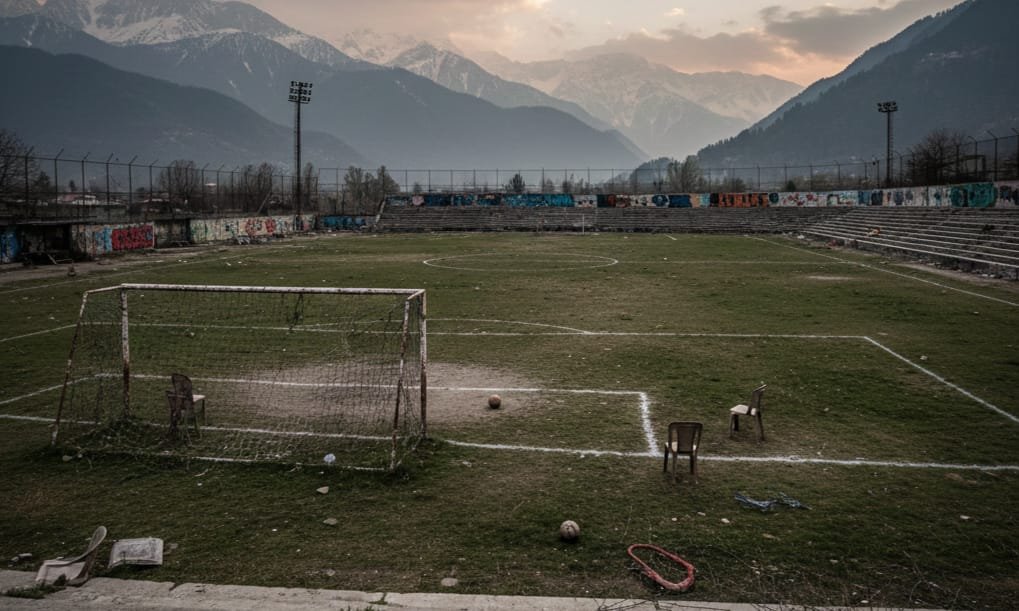
Regrettably, football activities in Jammu and Kashmir have witnessed a prolonged period of stagnation. For a considerable time, there has been a noticeable lack of regular tournaments and well-organised league structures, which are essential for player development and competitive exposure. This absence has not only impacted the overall performance levels of players but has also created serious hurdles in identifying, nurturing, and promoting new and promising talent. Without a consistent competitive framework, the growth of football in the region remains constrained, calling for focused attention and timely intervention.
To rejuvenate football in Jammu and Kashmir, a balanced approach combining grassroots development with strategic planning is essential. Nurturing young talent requires strong community engagement through regular local tournaments and league structures, which are crucial for generating interest, increasing participation, and sustaining long-term growth of the sport.
Football in Jammu urgently needs attention, and the development of football infrastructure is most critical, the key to its growth lies in improving infrastructure and coaching programmes.
Currently, the region has only two turf fields— Nagrota, which is too small for 11 a-side matches, and the overcrowded Parade field. Even the Science College ground, located in the heart of the city, is below standard and requires upgrading.
Given Jammu city’s central location, it requires more football turf/fields that adhere to modern standards, as the current single turf at Parade is insufficient for the huge footfall of players being centrally located. Furthermore, the net of modern type football turf be extended to all districts to channelise the talent and imbibe football for ensuring better future of game and players.
We cannot produce talent unless we provide basic facilities to the players, such as ground facilities and licensed coaches.
The Government and the concerned departments are urged to expedite the proposals for establishing astro turf grounds in Jammu so that players would get an all weather friendly stadium and also organise coach education programmes so that our ex-players or coaches can enhance their coaching skill in this field and nurture players.
Making football compulsory in schools, colleges, and universities and reviving departmental teams will help build a strong talent pool and create jobs for footballers as coaches. Early exposure to football develops discipline, teamwork, and fitness among students while helping identify skilled players. At the same time, employing coaches in educational institutions provides livelihood opportunities and strengthens the overall football ecosystem.
In Jammu, football can greatly benefit from the involvement of ex-players and the corporate sector, building on the region’s notable football talent. Former players are already making a positive impact by providing voluntary coaching to young talents. However, the non-formation of JKFA has resulted in the complete halt of league tournaments.
Given the uncertainty surrounding the JKFA’s revival, which has been pending for five years, it’s crucial that stakeholders take initiative. We should focus on sustainable growth by reducing dependence on government-funded tournaments and fostering a more inclusive football environment. Now it is the ideal time to rejuvenate football in Jammu through collaborative efforts that offer opportunities to the youth. Corporate involvement, through team sponsorship and infrastructure investment, can be productive for nurturing football talent. Former players’ efforts are praiseworthy, and with corporate backing, football activities can be sustained.
A well calibrated approach to revitalizing football in Jammu involves a unified strategy. I appeal to all former players, coaches, corporate leaders, and enthusiasts to collaborate in creating opportunities for young individuals to fulfil their dreams excelling in the game of football. There needs to be a multipronged approach spreading from better infrastructure, coaching and providing a platform to aspiring players to showcase their talent at national and international level.
This can be achieved by reviving league tournaments with corporate participation and utilizing the expertise of experienced coaches for various age groups. Implementing this initiative across all districts can contribute to establishing Jammu as a thriving sports hub. Collectively, we can elevate football to new heights by creating a football ecosystem in Jammu and encourage and support to emerging talent to prove their mettle in the competitive football arena
The Writer of This Article is Arun Malhotra, Who Is a Former International Footballer and Technical Member, All India Football Federation (AIFF).