
Nazim Ali Manhas
Mendhar, The uniform speaks of discipline, duty, and unshakeable resolve. It is stitched with sacrifice and worn in places where the nation sleeps peacefully because someone else stands awake. Yet, every once in a while, that same uniform tells a quieter, more powerful story—one that doesn’t involve weapons, warnings, or war rooms.
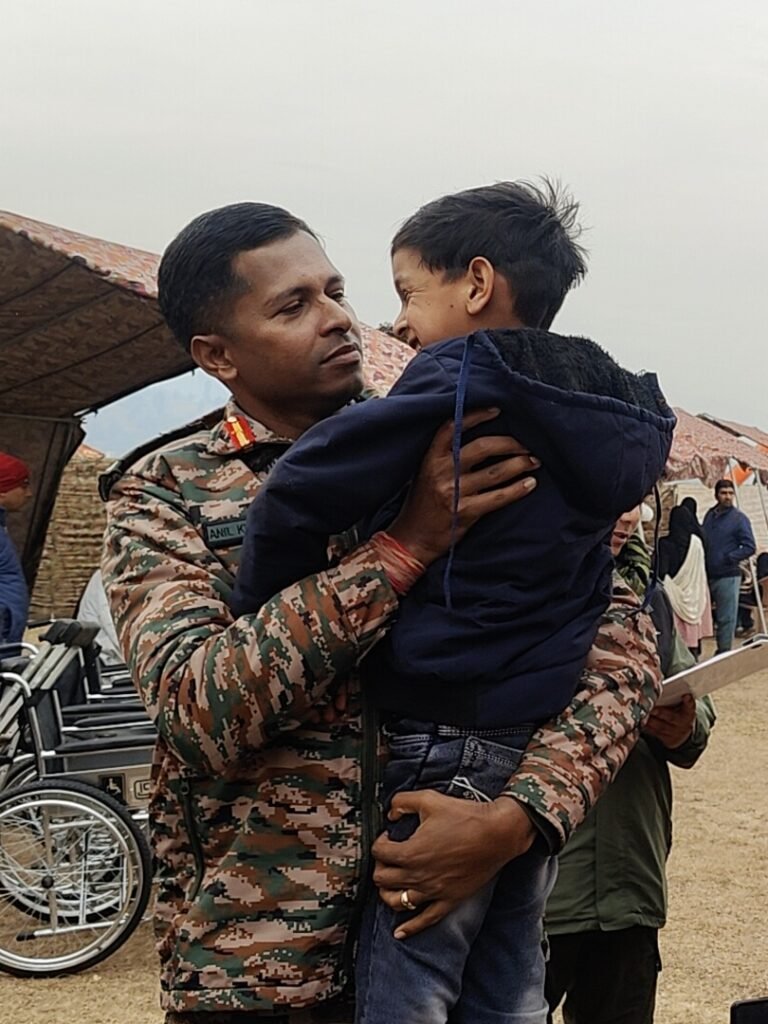
In a moving moment that cuts through the noise of daily headlines, an Army officer is seen lifting a specially abled child in his arms. No drills. No commands. Just instinctive human kindness. It’s a reminder that real power doesn’t live in the badge or the rank; it lives in compassion.
This single act says more than a thousand speeches. It shows that the Indian Army is not just a force that guards borders, but a family that understands pain, vulnerability, and hope. The strength that defends the nation is the same strength that stoops gently to protect those who need care the most.
For children with special needs and their families, such moments build trust that no policy document ever could. It reassures them that the men and women in uniform are not distant figures—they are allies, listeners, and protectors in the truest sense.
In an age obsessed with hard power and tough posturing, this scene quietly redefines leadership. True leadership is not only about standing tall against threats, but also about bending down with empathy. The Army’s service, therefore, goes beyond the battlefield—it enters hearts, villages, and lives.
Because at the end of the day, borders are secured by strength, but a nation is held together by compassion. And when both wear the same uniform, that’s service at its finest.DD