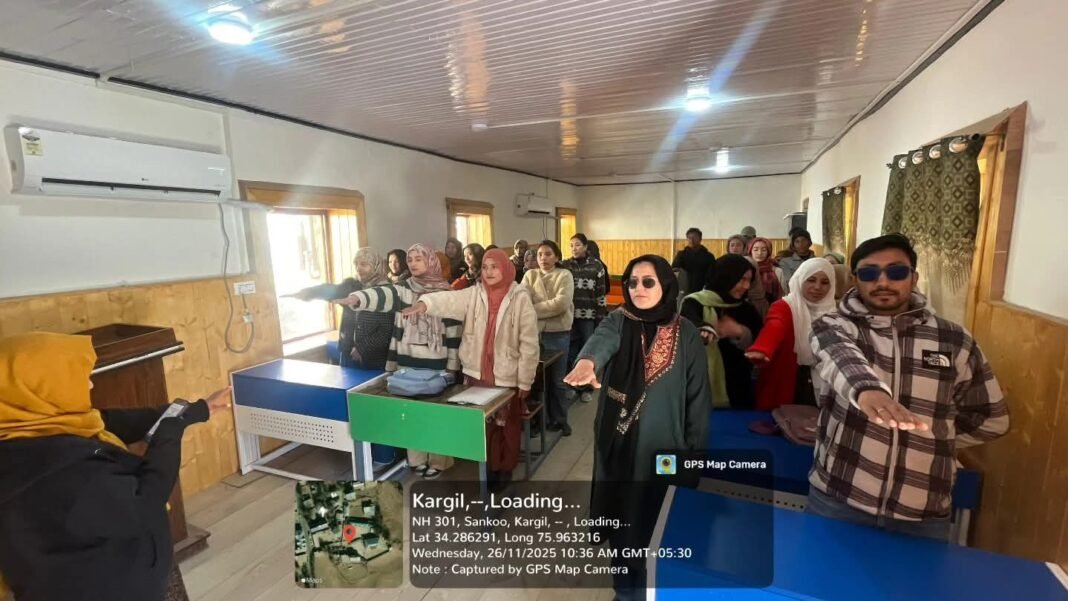


The labour card camp organised for workers at Nehru Market Warehouse is a highly commendable and timely initiative. In our society, the labour class forms the foundation on which the entire economic activity stands, yet it is unfortunate that this very class remains the most neglected when it comes to rights and welfare. Workers toil daily, power the economy, and keep industries running, but meaningful discussions about their rights seldom take place. In such circumstances, the decision of a traders’ federation to facilitate labour card registration is not only praiseworthy but also exemplary.
In recent years, the Central Government has introduced several reforms in labour laws. Welfare schemes such as social security, accidental insurance, pension, medical benefits, ESI, and EPF are not just moral obligations but essential pillars of a strong and just society. However, the reality on the ground is that these schemes benefit workers only when private establishments, market associations, and employers participate actively in their implementation.
Unfortunately, millions of workers in the unorganised sector still remain unregistered, undocumented, and deprived of basic protections. Unless trader bodies, industrial units, shopkeepers’ associations, and contractors acknowledge their responsibility, even the best government schemes will remain confined to paperwork. It is for this reason that the initiative taken by the Nehru Market Traders Federation serves as a guiding light for others.
There is an urgent need for trader associations across Jammu & Kashmir and the rest of the country to follow this model—compile proper data of all workers operating within their jurisdiction, help them obtain labour cards, and ensure that they receive government welfare benefits on a priority basis. Ensuring labour rights is not solely the government’s responsibility; it is a shared duty of all responsible sections of society. At the same time, departments such as Labour & Employment, EPFO, ESI, and other related agencies must coordinate with traders, hold joint camps, launch awareness drives, and create mechanisms that make it easier for workers to access facilities. Many workers fail to benefit from welfare schemes due to illiteracy, lack of awareness, or complicated procedures, making field-level outreach indispensable.
Workers are the backbone of any society. If their future remains insecure, no economy can remain strong for long. Therefore, for social justice, economic equality, and human dignity, the state, institutions, industry, traders, and civil society must work together under a unified strategy. The initiative at Nehru Market is a significant milestone in this direction. It is hoped that such efforts will expand beyond one marketplace and spread across the region, ensuring that every worker receives the protection and dignity they truly deserve.DD